DecadGarden Yard Tips by DecoratorAdvice: The Sequence That Changes Everything
Most yard makeovers fail in the planning phase — not the planting one. Homeowners across the US spend money on furniture and flowers only to tear everything out six months later when the patio drainage is wrong, the lighting is blocked, or a new pathway cuts straight through a freshly planted garden bed. The real problem is sequence.
The decadgarden yard tips method fixes this by treating your yard like a construction project with a non-negotiable order of operations: zone first, then surface, then light, then furnish, then plant. Every step depends on the one before it. Skip the order and you are not saving time — you are guaranteeing rework.
Our guide covers exactly that sequence, with practical guidance on surface materials, climate-matched plant selection for US zones, lighting placement that actually survives furniture rearrangement, and the common decoration mistakes that make yards look cluttered no matter how much money went into them. If your yard has never felt finished, this is probably why.
Why Getting the Sequence Wrong Is Expensive

Here is what actually happens when homeowners skip ahead: a decorative gravel path goes down, then a contractor needs access to run an outdoor power line, and the gravel gets displaced. New sod gets laid, then post-hole digging for a pergola compacts and kills it. Potted plants get arranged, then the furniture arrives and half the pots need to move anyway.
The decadgarden yard tips sequence exists because each structural layer creates conditions the next layer depends on. Lighting position depends on furniture layout. Furniture layout depends on surface zones. Surface zones depend on how the space is divided. None of this works in reverse.
| Step | What You Do | Cost of Skipping |
|---|---|---|
| 1. Zoning | Divide yard into dining, lounging, planting, and play areas | Zones overlap; furniture and plants compete for the same square footage |
| 2. Surfaces | Install pathways, gravel beds, decking, or concrete pads | Construction foot traffic destroys plants and furniture already in place |
| 3. Lighting | Run wiring or plant solar stakes along walkways and walls | Lights end up blocked by furniture placed later; reinstalling means moving furniture again |
| 4. Furniture | Choose pieces sized for the zone, not the full yard | Oversized pieces shrink usable space and block sightlines to the garden |
| 5. Plants & Decor | Select climate-matched plants; add statuary and art last | Plants placed before zones are set often end up in high-traffic areas and fail |
How to Apply the decadgarden yard tips Sequence Step by Step
Step 1 — Zone Your Outdoor Space
Walk the yard and mark areas with chalk or string. Most residential yards in the US need no more than three zones: one for dining or cooking, one for seating and lounging, and one for planting or play. Mark them before doing anything else. Zoning is the hardest step to undo later.
Small yards under 500 square feet should have two zones maximum. Trying to carve out three functions in a tight space creates visual noise and makes every area feel cramped. Use dual-purpose elements — a raised planter bench, a dining table that folds flat — to overlap two functions cleanly.
Step 2 — Set Your Surfaces
Surfaces connect zones and manage water drainage. The material you choose also sets the visual tone for every element that comes after. Gravel reads casual and cottage-style; concrete or large-format pavers read contemporary; natural stone reads traditional or formal. Pick a material that matches the house exterior before committing.
Drainage matters here more than most guides admit. A gravel path adjacent to a grass lawn needs an edging border or the gravel migrates. A poured concrete pad needs a slight slope away from the house foundation — roughly 1 inch drop per 8 feet — or water pools against the structure.
Step 3 — Install Lighting Before Furniture Arrives
This is the step most often skipped and most often regretted. Solar path stakes and low-voltage wired fixtures need to go in while the space is still open. Once furniture is placed, going back to run a cable or reposition a fixture means moving heavy pieces, possibly damaging new surface materials.
Two types of lighting serve most yards well: ambient lighting (string lights overhead, lanterns) and task or pathway lighting (solar stakes, step-mounted fixtures). Install pathway lighting along every edge where you defined a zone boundary — it reinforces the zone layout visually at night and reduces trip hazards.
Step 4 — Choose Furniture Sized for the Zone
A common US home improvement mistake: buying a large sectional sofa because it looked good in a showroom, then discovering it takes up 70 percent of the patio zone. The rule used to size indoor furniture applies outdoors too — leave at least 3 feet of clear walkway around any seating arrangement.
For small yards, folding and stackable furniture is not a compromise. It is a practical tool that lets the same space serve different functions on different days. A folding bistro table for morning coffee becomes a prep surface for outdoor entertaining. Flexibility is worth more than mass in compact outdoor spaces. For renovation ideas that extend indoors, see renovation tips.
Step 5 — Plants and Decor Come Last, Not First
Every other article on decadgarden yard tips leads with plants. This guide doesn’t, because plants are the one element that fails most visibly when the structural decisions preceding them are wrong. A plant in the wrong spot — one that ends up in deep shade when you expected partial sun, or in a high-foot-traffic path because the zoning was never finalized — is a dead plant within one season.
Choose climate-appropriate varieties. That sounds obvious, but a surprising number of US homeowners in USDA Zones 6 and 7 plant lavender in full clay soil, or try ornamental grasses in deep shade. Get the soil type right first, then select plants that match what you actually have.
| USDA Zone | Region (Examples) | Recommended Plants | Avoid |
|---|---|---|---|
| Zones 3–5 | Minnesota, Maine, Montana | Coneflowers, ornamental grasses, hostas, spirea | Lavender, bougainvillea, rosemary |
| Zones 6–7 | Virginia, Ohio, Oregon coast | Black-eyed Susans, boxwood, daylilies, Russian sage | Tropical palms, agave (most varieties) |
| Zones 8–9 | Texas, Georgia, Pacific NW lowlands | Crape myrtle, salvia, muhly grass, loropetalum | Tulips (unreliable), cold-hardy only varieties |
| Zones 10–11 | South Florida, Hawaii, Southern California | Bougainvillea, agave, bird of paradise, plumeria | Anything requiring a cold dormancy period |
Decoration Mistakes That Undo Good Yard Work
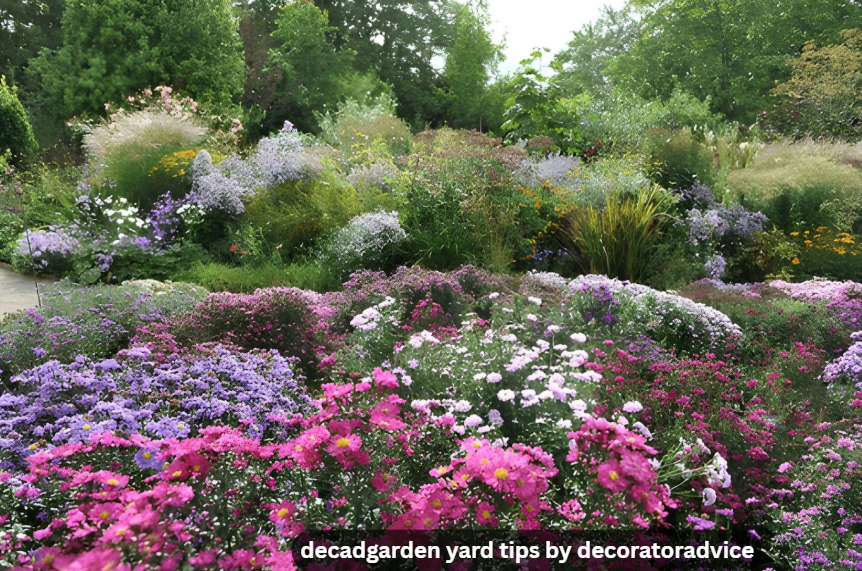
Once the structure is done, decoration is where most yards fall apart again. The most common problem is adding too much, too fast. A yard with five different types of planters, two water features, a wind chime, three garden statues, and string lights in four different color temperatures looks busy, not styled.
One material, two accent colors, one lighting color temperature. That is the rule. If your surfaces are warm-toned (terracotta, cedar, sandstone), your decor accents should stay in the warm range too. Cold-blue LED string lights next to a warm cedar deck create a color disconnect that registers as cheap even if both elements are quality products.
Water features deserve specific attention because they are the decoration most often regretted. A large fountain in a small yard creates constant background noise that is pleasant for ten minutes and irritating after a week. Wall-mounted water features and small recirculating bowls give the visual of water movement without the sound pressure. If you are considering smart outdoor upgrades alongside yard work, explore decoradtech smart home ideas for integrated irrigation and lighting controls.
Seasonal Maintenance: What to Do and When
The decadgarden yard tips approach does not stop at installation. Maintenance decisions made at the start — mulch depth, soil amendment, surface material choice — determine how much work the yard requires over time. A yard that looks good in July but dies in August was not properly set up in spring.
Deep watering (longer, less frequent sessions) builds stronger root systems than daily shallow watering. In most US regions, two to three deep watering sessions per week outperforms daily light watering. Mulch at 2 to 3 inches reduces that requirement further by slowing moisture loss from the soil surface.
Frequently Asked Questions
What is the decadgarden yard tips?
The decadgarden yard tips is a five-step yard design sequence: zone your space, set surfaces, install lighting, place furniture, then add plants and decor. Each step creates the conditions for the next. Completing them out of order typically means redoing earlier work at additional cost.
Why does yard design order matter?
Structural work — digging, laying surfaces, running power lines — damages anything already in place. Plants placed before hardscaping often end up in foot-traffic paths or get root-disturbed by later construction. Furniture placed before lighting gets installed blocks fixture access. Sequence prevents that chain of rework.
What plants work best for US climate zones?
In USDA Zones 3–5, cold-hardy perennials like coneflowers and hostas are reliable. Zones 6–8 support lavender, black-eyed Susans, and boxwood well. Zones 9–11 suit drought-tolerant varieties including salvia, agave, and bougainvillea. Always confirm your specific zone at the USDA Plant Hardiness Zone Map before buying.
How do I zone a small yard effectively?
Keep it to two zones in yards under 500 square feet. A dining-and-cooking zone plus a planting border is enough. Dual-purpose furniture — a bench with built-in planter storage, a folding table that packs flat — lets a small space shift functions without permanent divisions that make it feel smaller.

Post Comment