What Backyard Hacks DecadGarden Can Transform Your Yard?
A backyard with potential is one of the most common and most frustrating situations in US homeownership. The space is there. The intention is there. But between not knowing where to start and not wanting to commit to something expensive that might not work, the yard stays in its current state — functional at best, neglected at worst — while the seasons pass.
What most backyard improvement content misses is the distinction between hacks that look impressive in articles and hacks that actually transform how a yard feels and functions in daily life. The difference matters. A yard that photographs well after a Saturday of work but reverts to dysfunction by Tuesday hasn’t been transformed — it’s been temporarily arranged.
Backyard hacks decadgarden focuses on the changes that stick — interventions that alter the yard’s underlying structure or use pattern in ways that compound over time rather than requiring constant maintenance to maintain their impact. These are the specific techniques that experienced gardeners and landscape designers apply as a matter of course, that most homeowners discover only through years of trial and error.
This article covers those hacks specifically: what they are, why they work, which ones to apply first, and how they work together to produce a backyard that genuinely functions as an extension of the home rather than an afterthought behind it.
The Difference Between Backyard Hacks That Work and Ones That Don’t
Not every backyard improvement produces transformation. Understanding what separates structural hacks from cosmetic ones is the foundation of the backyard hacks decadgarden approach.
| Hack Type | Example | Duration of Impact | Compounds Over Time? |
|---|---|---|---|
| Structural | Installing a permanent pathway | Permanent | Yes — traffic flow improves daily |
| Biological | Soil amendment before planting | Seasons to years | Yes — improves each growing season |
| Behavioral | Creating a defined seating destination | Permanent if designed well | Yes — space gets used consistently |
| Cosmetic | Painting a fence temporarily | 1–2 seasons | No — requires repeat application |
| Seasonal | Annual planting for color | One season | No — replanted each year |
| Organizational | Tool storage system | Permanent | Yes — reduces friction daily |
Backyard hacks decadgarden prioritizes the structural and biological categories first — the changes that produce compounding returns — and layers cosmetic improvements on top of that foundation rather than applying them to an unresolved structural situation.
Backyard Hacks DecadGarden That Produce Structural Transformation
The Pathway Hack That Changes How a Yard Is Used
A yard without a defined pathway gets traversed wherever seems convenient in the moment. Over time, this produces worn patches in the lawn, muddy shortcuts across planted areas, and a yard that feels disorganized because movement through it has no structure.
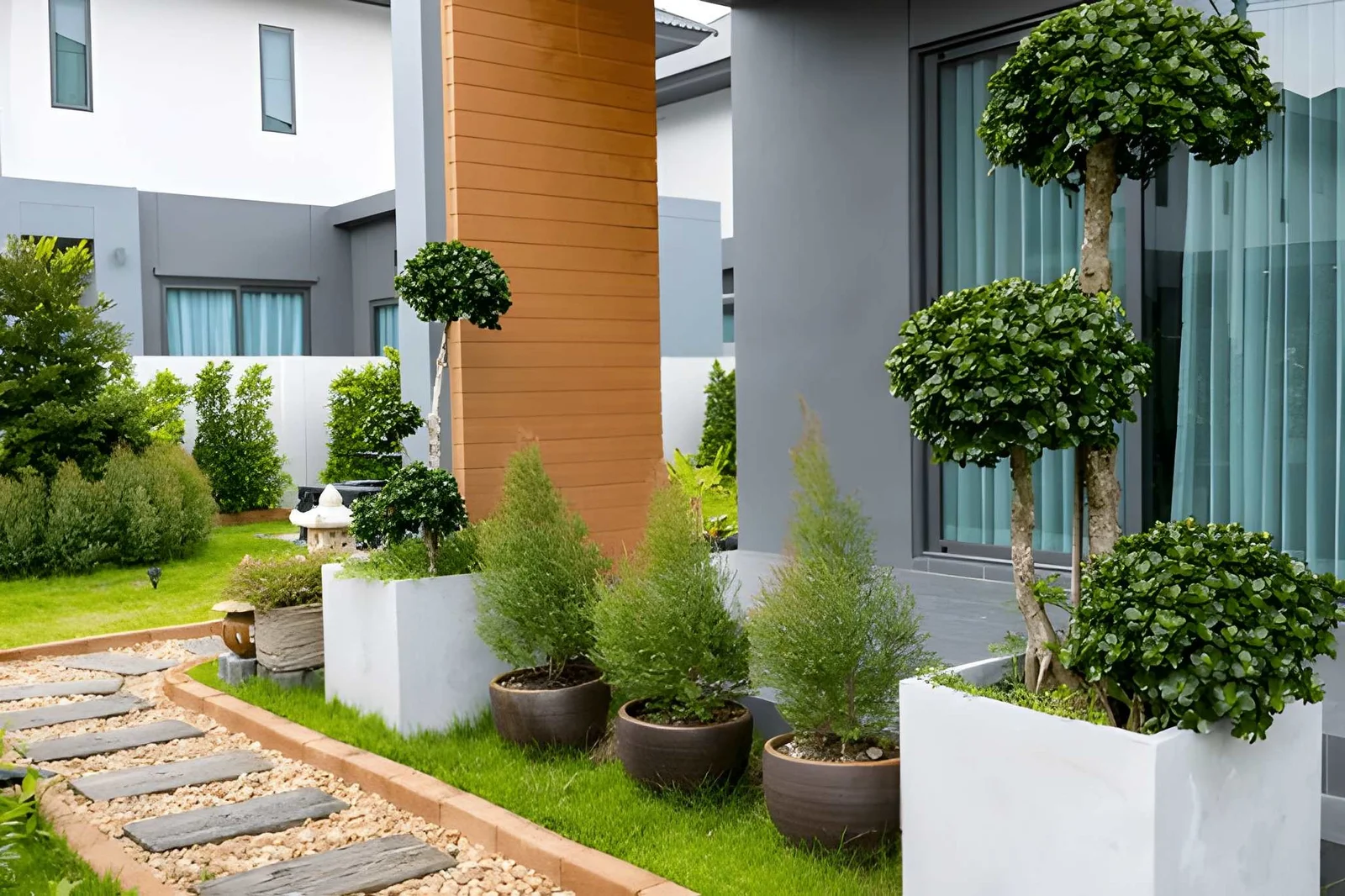
A simple stepping stone or gravel pathway — installed in the routes people actually walk, not the routes they’re supposed to walk — immediately changes how a yard functions. It directs traffic away from planted areas, prevents lawn wear patterns, and gives the yard a structural backbone that makes everything else look more intentional.
The backyard hacks decadgarden approach to pathways is behavioral before aesthetic: observe where people actually walk for two weeks, then install the pathway where the behavior already is rather than trying to redirect it to a more convenient location.
| Pathway Material | Cost Per Linear Foot | Installation Difficulty | Durability | Aesthetic |
|---|---|---|---|---|
| Stepping stones (precast) | $2–$8 | Low | High | Natural, informal |
| Gravel with edging | $3–$8 | Low-Medium | High | Contemporary, clean |
| Decomposed granite | $2–$6 | Low-Medium | Medium-High | Warm, California aesthetic |
| Brick (reclaimed) | $5–$15 | Medium | Very High | Traditional, classic |
| Concrete pavers | $4–$12 | Medium | Very High | Clean, modern |
| Mulch path with borders | $1–$4 | Very Low | Medium | Informal, garden-style |
The Soil Feeding Hack That Transforms Plant Performance
Most US residential backyards have soil that has been depleted, compacted, and never meaningfully amended since the home was built. Plants placed into this soil underperform regardless of species, watering, or sunlight — and the yard consistently looks like it’s struggling rather than thriving.
Backyard hacks decadgarden treats soil amendment as the single highest-leverage biological investment in any yard. Applied once before a major planting, a two-inch compost layer worked into the top eight inches of soil changes the performance trajectory of everything planted into it — improving nutrient availability, water retention, drainage, and microbial activity simultaneously.
The impact isn’t immediate in the way that mulching or planting is — but by midsummer of the first season, yards with amended soil consistently outperform unamended ones so significantly that it’s visible from the street.
The Zoning Hack That Makes a Yard Feel Larger
Counterintuitively, dividing a backyard into defined zones makes it feel larger rather than smaller. An undivided yard — all lawn, no delineation between sitting area and play area and garden area — reads as one large undifferentiated space. Defined zones give the eye different destinations and the brain a sense of having moved through multiple distinct areas.
Zones can be defined through level change (raised beds or sunken seating), material change (lawn to gravel to paving), or planting (a hedge or grass border between areas). The investment required varies from minimal (a gravel border and some edging) to significant (a raised deck), but even low-cost zone definition produces an immediately more designed appearance.
| Zoning Method | Cost Range | Permanence | Impact on Perceived Space |
|---|---|---|---|
| Gravel border between zones | $30–$100 | High | Medium-High |
| Planted hedge or grass border | $60–$200 | High — grows over time | High |
| Raised planting bed as divider | $80–$300 DIY | High | Very High |
| Change in paving material | $200–$800 | Permanent | High |
| Level change (deck or sunken area) | $500–$5,000 | Permanent | Very High |
| Low wooden border edging | $20–$60 | Medium | Medium |
Backyard Hacks DecadGarden for Specific Problem Areas
The Shaded Area Hack
Most US backyards have at least one area that receives insufficient sunlight for standard lawn grass — under trees, along north-facing fence lines, beneath overhangs. These areas become bare patches, mud problems, or constant replanting challenges if treated as lawn.
The hack: stop fighting the shade and work with it. Replace struggling lawn grass in shaded areas with shade-tolerant groundcovers (hostas, pachysandra, sweet woodruff, ajuga) or a mulched path. Shade-tolerant groundcovers establish once and spread over time, requiring virtually no maintenance and producing a lush, healthy appearance that struggling grass never achieves.
The Slope Hack
A sloped backyard creates erosion, water runoff, and lawn mowing difficulty simultaneously. Backyard hacks decadgarden addresses slopes not by fighting them but by terracing — converting the slope into a series of flat steps that eliminate erosion, create planting opportunities, and add visual interest.
Simple DIY terracing with timber or landscape block costs $3 to $15 per linear foot and converts a problem slope into a productive planting area or a tiered garden feature.
The Privacy Hack That Doesn’t Look Like a Privacy Screen
Standard privacy solutions — solid wood fences, bamboo panels — look exactly like what they are: a barrier. Backyard hacks decadgarden approaches privacy as a design problem, not a barrier problem, using layered planting at varying heights to create screening that reads as a garden feature rather than a boundary.
A combination of tall ornamental grasses at 5 to 6 feet, medium flowering shrubs at 3 to 4 feet, and low perennials at 1 to 2 feet creates effective privacy screening that looks like a considered border planting rather than a fence substitute.
Frequently Asked Questions
What are backyard hacks decadgarden and how are they different from standard garden advice?
Backyard hacks decadgarden are specific, tested techniques for transforming backyard spaces that prioritize structural and biological changes over cosmetic ones. The difference from standard garden advice is specificity and prioritization — rather than a general list of improvements, these hacks are sequenced by impact and designed to compound over time rather than requiring constant reinvestment.
What is the single most transformative backyard hack for most US yards?
Defined pathways installed where people actually walk. This single change organizes the entire yard’s use pattern, protects planted areas from traffic damage, and gives the space a structural backbone that makes every other improvement look more intentional. It costs as little as $50 in stepping stones and produces immediate and permanent results.
How do I know which backyard hacks to prioritize for my specific yard?
Identify the primary failure: if the yard is never used, the failure is usually absence of a comfortable destination and shade. If it looks neglected, the failure is usually unedged borders and no pathway structure. If plants consistently underperform, the failure is almost always soil quality. Diagnose the root problem before investing in solutions — the right hack for the actual problem produces transformation; the wrong hack produces marginal improvement.
Can backyard hacks decadgarden ideas work on a small urban backyard?
Yes — and small backyards often respond better than large ones because the same investment goes further in a contained space. The pathway hack, zone definition, and vertical planting strategies all work at any scale. Small urban backyards benefit particularly from vertical gardening — wall-mounted planters, trellises, and climbing plants — which maximizes planting density without consuming limited floor space.
What backyard hacks produce the fastest visible results?
Edging all lawn and bed borders (visible immediately), applying fresh mulch to all planting beds (immediate visual upgrade), installing a simple stepping stone pathway (same-day transformation), and adding string lights to a seating area (immediate evening usability). These four changes combined cost $100 to $300 and produce a yard that looks significantly more maintained and designed than it did before.
The Bottom Line
Backyard hacks decadgarden approaches yard transformation as a structural problem before it’s a decorating problem. The hacks that produce lasting change — defined pathways, amended soil, zone definition, problem-area solutions — alter how the yard functions rather than how it looks in a particular moment. Cosmetic improvements layered on top of that structural foundation then produce cumulative results that look designed rather than periodically refreshed.
Identify the root problem. Apply the structural hack that addresses it. Let biological improvements compound over the growing season. Layer aesthetic choices on top of a functional framework.
That sequence, applied to virtually any US backyard, produces transformation that exceeds what the individual changes would suggest — and it stays transformed, season after season, without requiring the same effort to maintain as purely cosmetic improvements do.
Must visit https://tipsbydecoratoradvice.com/ for backyard hacks.

Post Comment