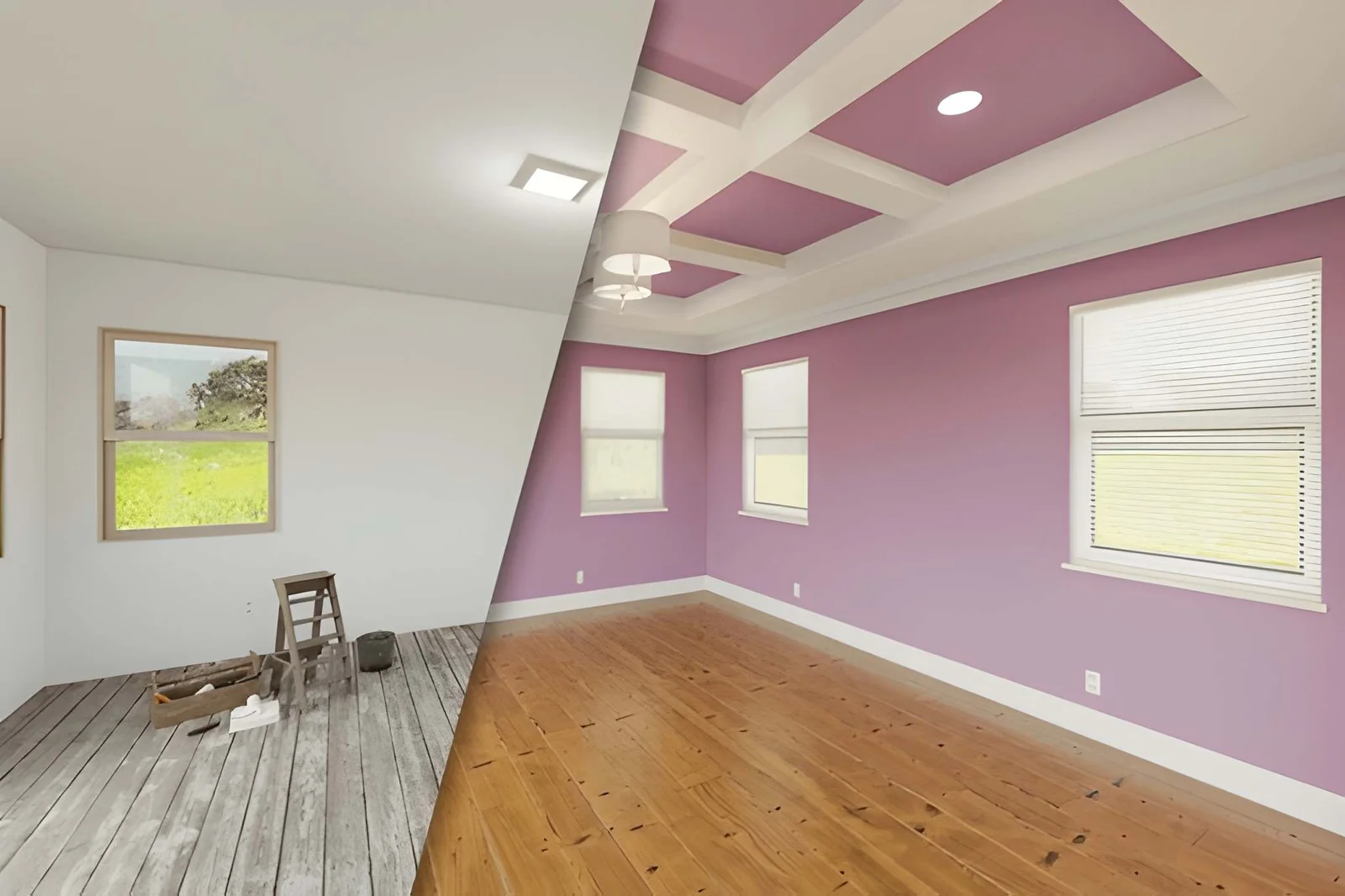
How Can Upgrading Tips DecorAdHouse Transform Your Home?
Home improvement content is everywhere and genuinely useful advice is rare. Most of what surfaces when US homeowners search for upgrade ideas falls into one of two categories: obvious suggestions you’ve already considered, or aspirational transformations that require budgets and skill levels most households don’t have. Neither moves the needle for someone who owns a real home with real constraints and wants to know specifically what to do next.
That’s the gap upgrading tips decoradhouse fills. Not a list of things you could theoretically do to a home. A prioritized, practical framework for identifying which upgrades matter most in your specific situation — and then executing them in an order that builds on itself rather than creating isolated improvements that don’t compound into anything meaningful.
The difference between a home that’s been worked on and one that genuinely feels transformed comes down to that sequencing — and to knowing which upgrades punch above their weight versus which ones absorb budget without visible return. This article covers exactly that: how upgrading tips decoradhouse approaches home transformation, which upgrade categories produce the highest impact, the specific changes that most US homes need but most homeowners overlook, and how to build an upgrade sequence that produces cumulative results rather than scattered individual improvements.
Why Most Home Upgrades Fail to Transform
The failure pattern in most US home upgrade projects is consistent regardless of budget. Individual upgrades get made without a connecting logic, producing homes that are better in several isolated ways but haven’t fundamentally changed in how they feel.
| Why Home Upgrades Fail to Transform | What It Produces | What Fixes It |
|---|---|---|
| Upgrades chosen by trend, not need | Changes that don’t address actual problems | Diagnosis before purchase |
| Wrong sequence — aesthetics before structure | Decorated problems rather than fixed ones | Structure first, decoration second |
| Budget spread too thin | Many small improvements, nothing significant | Concentrate on highest-impact categories |
| Upgrades made in isolation | No compound effect across the home | Connected upgrade logic across rooms |
| Overlooking free or low-cost changes | Paid upgrades surrounded by unaddressed basics | Clean, edit, and reorganize before spending |
| Chasing renovation when refresh suffices | Expensive fixes for problems that weren’t structural | Correct diagnosis of scale required |
Upgrading tips decoradhouse approaches this differently by starting with the diagnostic question: what is actually wrong with this space, and what’s the minimum intervention that fixes it? That question consistently produces better outcomes than starting with a budget and trying to fill it with improvements.
The Upgrade Categories Where Upgrading Tips DecorAdHouse Delivers Most Value
Lighting Upgrades: The Highest Impact Per Dollar Spent
Every list of upgrading tips decoradhouse produces starts here, and for consistent reason: lighting is the single upgrade category that produces the most visible transformation per dollar invested while being the most consistently underfunded in US home improvement budgets.
Builder-grade lighting fixtures — the flat, round flush-mounts that come standard in most US residential construction — communicate one thing clearly: no design decision was made here. Replacing them with scaled, intentional fixtures signals that someone thought about the space. That signal changes how the entire room reads, regardless of what else is or isn’t in it.
Beyond fixtures, the upgrade from fixed overhead lighting to layered lighting — ambient, task, and accent sources operating at different heights — changes the mood and function of every room it’s applied to. Dimmer switches at $15 to $40 each extend this further by allowing rooms to transition from functional daytime settings to comfortable evening environments without any other change.
| Lighting Upgrade | Cost Range | Visual Impact | DIY Feasible? |
|---|---|---|---|
| Replace builder flush mount with pendant | $80–$250 | Very High | Yes |
| Add dimmer switches throughout | $15–$40 each | High | Yes |
| Swap cool bulbs to warm (2700K) | $15–$40 total | High | Yes — immediate |
| Add floor lamp to dark corner | $45–$120 | High | Yes |
| Under-cabinet kitchen lighting | $40–$150 | High | Yes |
| Replace bathroom vanity light | $60–$200 | Medium-High | Yes |
Kitchen Upgrades: Maximum ROI Without Full Renovation
Kitchen renovations in the US average $25,000 to $50,000. Upgrading tips decoradhouse focuses instead on the kitchen changes that produce 80% of the visual transformation at roughly 5% of the cost — the incremental upgrades that don’t require gutting the space.
Cabinet hardware replacement is the single most impactful kitchen upgrade per dollar: $50 to $300 in new pulls and knobs transforms dated cabinetry into something that reads as intentional. Cabinet painting takes this further for $200 to $600 in DIY materials, changing the most visually dominant element in most kitchens without touching the structure. A new faucet at $150 to $400 updates the one kitchen fixture that gets handled hundreds of times daily.
Bathroom Upgrades: Small Space, High Visibility
Bathrooms are experienced in close proximity and evaluated critically by guests. Upgrading tips decoradhouse identifies the bathroom as the room where modest targeted upgrades produce disproportionate perceived value — for the homeowner and for any future buyers.
The vanity mirror is the most overlooked bathroom upgrade: replacing a builder frameless mirror with a framed alternative costs $80 to $250 and immediately elevates the space. Vanity lighting replacement at $60 to $200 addresses the most common bathroom flatness problem. Grout cleaning and resealing at $15 to $40 in materials makes an old bathroom look maintained rather than aged.
| Bathroom Upgrade | Cost Range | Impact | Time Required |
|---|---|---|---|
| Replace frameless mirror with framed | $80–$250 | Very High | 30 minutes |
| Replace vanity light fixture | $60–$200 | High | 1–2 hours |
| Regrout or clean and seal existing grout | $15–$40 | High | 2–4 hours |
| Add floating shelves for storage | $30–$100 | Medium-High | 1 hour |
| Replace toilet hardware (handle, fill valve) | $15–$40 | Medium | 30 minutes |
| New shower curtain and rings | $30–$80 | Medium-High | 10 minutes |
The Upgrades Most US Homeowners Overlook
Upgrading tips decoradhouse consistently identifies a set of upgrades that produce significant results but rarely appear on standard home improvement lists — either because they’re free, because they’re so simple they don’t seem significant, or because they’re not products being marketed.
Editing before upgrading. The single most impactful upgrade available to most US homeowners is removing things rather than adding them. A living room with too many objects in it doesn’t need new objects. It needs fewer, better-placed objects — which costs nothing and frequently produces more visible improvement than any purchase.
Cleaning that actually changes appearance. Pressure-washing a driveway or exterior siding produces a transformation that looks like a paint job. Deep-cleaning kitchen cabinetry changes how old hardware looks. Restoring hardwood floors through cleaning and conditioning — before considering refinishing — often produces 80% of the result at 5% of the cost.
Caulk and grout refresh. The condition of caulk and grout in kitchens and bathrooms communicates maintenance standards immediately. Fresh white caulk around a tub or sink makes the surrounding surfaces look newer. This costs $5 to $15 in materials and thirty minutes of time.
| Overlooked Upgrade | Cost | Time | Perceived Impact |
|---|---|---|---|
| Declutter and edit each room | Free | Variable | Very High |
| Pressure wash exterior and driveway | $0 (rental) to $150 | Half day | Very High |
| Deep clean and condition hardwood floors | $20–$60 | 2–4 hours | High |
| Replace caulk in bathrooms and kitchen | $5–$15 | 30–60 minutes | High |
| Clean and condition kitchen cabinets | $10–$30 | 2–3 hours | Medium-High |
| Replace dated outlet and switch covers | $1–$3 each | 5 min each | Medium — detail signal |
How to Sequence Upgrading Tips DecorAdHouse for Maximum Compound Effect
The compound effect in home upgrading comes from sequencing decisions so that each phase creates the conditions for the next phase to look its best.
| Sequence | Phase | Rationale |
|---|---|---|
| 1 | Edit and deep clean throughout | Reveals actual conditions; provides free improvement |
| 2 | Address structural issues — leaks, damage, drainage | Nothing cosmetic looks right over unaddressed structural problems |
| 3 | Upgrade lighting throughout | Changes how every other element reads; highest ROI |
| 4 | Kitchen and bathroom targeted upgrades | Highest visibility, highest resale impact |
| 5 | Living space furniture and layout assessment | Reposition before replacing |
| 6 | Paint — starting with highest-visibility rooms | Sets color framework for decorative decisions |
| 7 | Decorative layer last | Applied into an upgraded, organized space |
Frequently Asked Questions
What is upgrading tips decoradhouse and what makes it different from standard home improvement advice?
Upgrading tips decoradhouse is a practical home upgrade resource that prioritizes sequenced, high-impact changes over comprehensive renovation advice. The difference is specificity and prioritization — it identifies which upgrades matter most for real US homeowners operating within realistic budgets, and provides the ordering logic that makes upgrades compound rather than accumulate independently.
What upgrade produces the fastest visible transformation?
Lighting. Specifically, replacing builder-grade ceiling fixtures with scaled, intentional alternatives and switching from cool to warm bulbs throughout. These changes require no structural work, cost $15 to $250 per room depending on scope, and change how every other element in the room reads — furniture looks better, paint colors read more accurately, and the room feels designed rather than standard.
How much should I budget for meaningful home upgrades?
Meaningful transformation is achievable at almost any budget with correct prioritization. $500 concentrated on lighting and a bathroom mirror replacement produces more visible impact than $500 spread across ten small decorative purchases. $2,000 applied to lighting, kitchen hardware, bathroom fixtures, and fresh paint throughout transforms most US homes significantly. Budget allocation matters more than budget size.
Should I upgrade before selling or just price accordingly?
Targeted upgrades before sale consistently produce higher returns than the upgrade cost for kitchens, bathrooms, and curb appeal. Upgrading tips decoradhouse identifies the specific upgrades with the highest resale return — lighting, paint, kitchen hardware, bathroom fixtures, and exterior presentation — and distinguishes them from upgrades that satisfy the homeowner but don’t move buyer perception.
What’s the most common upgrading mistake US homeowners make?
Spending on decorative upgrades before structural and functional ones are addressed. A beautifully decorated kitchen with dated lighting and worn cabinet hardware still reads as outdated. Fix the hardware and the lighting first — the decoration looks better in an upgraded framework than it does surrounding unaddressed basics.
The Bottom Line
Home transformation through upgrading tips decoradhouse isn’t about the most expensive changes or the most comprehensive ones. It’s about the right changes in the right order — lighting before decoration, structure before aesthetics, editing before purchasing, diagnosis before execution.
The homes that look genuinely transformed rather than merely worked on are almost always the ones where someone made sequenced, prioritized decisions rather than scattered improvements. Upgrading tips decoradhouse provides the framework that makes those decisions coherent — and the specificity that makes them actionable for real US homeowners with real constraints.
Start with lighting. Edit before adding. Fix what’s broken before decorating what remains. That sequence, applied consistently, produces transformation that exceeds what the individual changes would suggest.
Must visit https://tipsbydecoratoradvice.com/ for home upgrading tips.

Post Comment