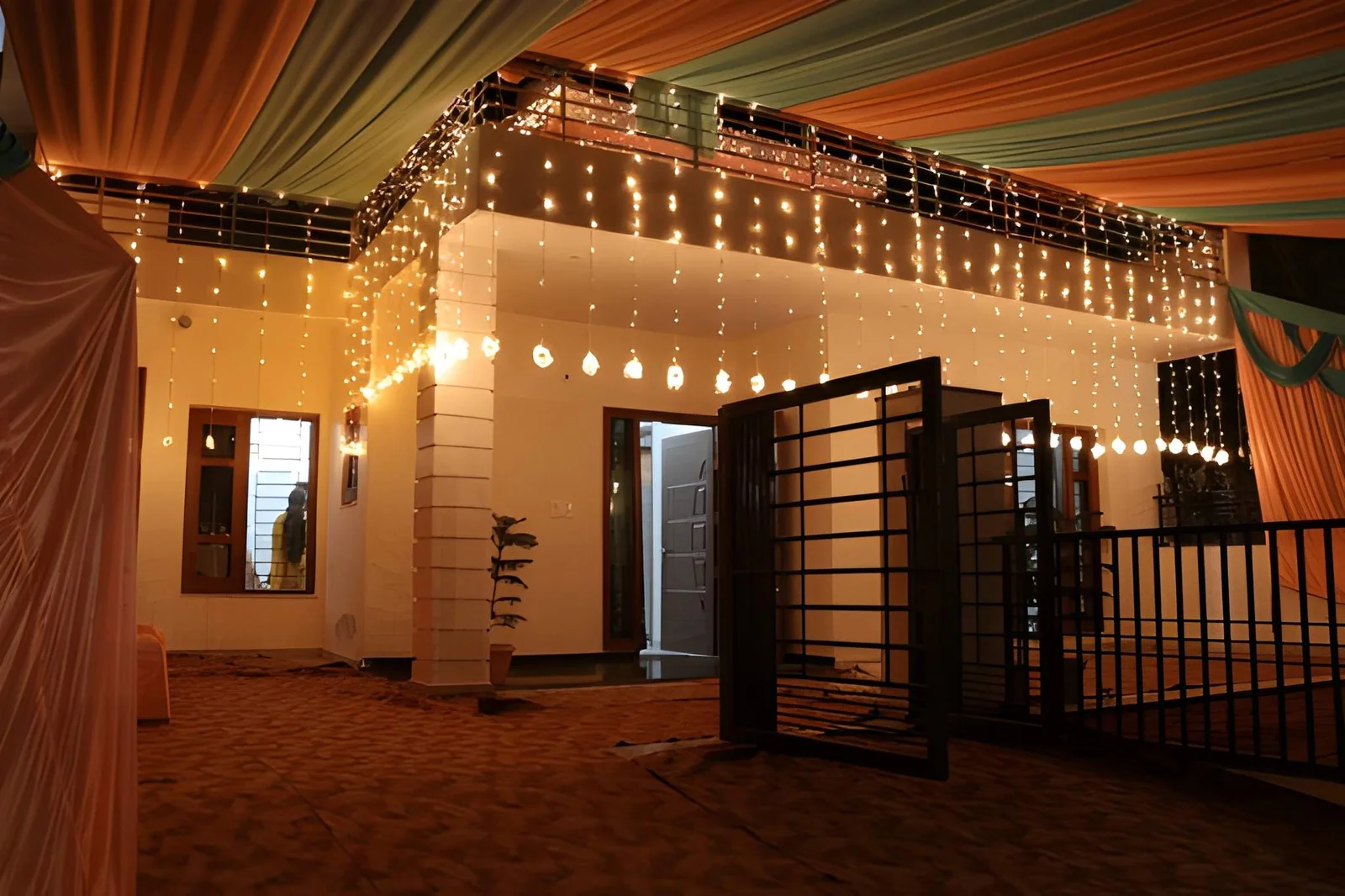
Looking for Stylish DecorAdHouse Lumination Ideas?
Of all the elements that determine how a home looks and feels, lighting is the one that gets the least deliberate attention and does the most invisible damage when it’s wrong. Most US homes run on a single overhead fixture per room — typically a builder-grade flush mount that casts flat, even light across the entire space, eliminating shadow, depth, and warmth simultaneously. The furniture can be excellent, the paint color carefully chosen, the layout thoughtfully arranged, and the room will still feel institutional if the lighting hasn’t been addressed.
That’s the problem decoradhouse lumination ideas was built to solve. Not lighting as an afterthought — as a foundational design element that gets planned before furniture is placed and before paint is chosen, because it affects how both of those decisions read in the finished space.
The right lumination strategy changes everything. It makes rooms feel warmer, more layered, more personal. It extends the usability of spaces into the evening. It makes art look better, makes furniture look more intentional, and makes paint colors read the way they were supposed to rather than the way a cool overhead bulb renders them.
This article covers the full decoradhouse lumination ideas framework — layering principles, room-specific strategies, fixture selection, bulb temperature, and the specific changes that produce the most dramatic results for the least investment.
Why Most US Home Lighting Falls Short
The starting point for any honest conversation about decoradhouse lumination ideas is understanding why the current approach in most US homes consistently underperforms.
| Common Lighting Failure | What It Produces | What Replaces It |
|---|---|---|
| Single overhead fixture per room | Flat, institutional, no depth or warmth | Layered ambient, task, and accent sources |
| Cool-white bulbs (4000K–6500K) | Makes warm colors read cold and clinical | Warm white bulbs (2700K–3000K) throughout |
| No dimming capability | Fixed mood regardless of time of day or use | Dimmer switches on all primary fixtures |
| Fixtures too small for the space | No visual presence, no design contribution | Scaled fixtures that read as intentional |
| Recessed lighting only | Even but characterless illumination | Pendants, floor lamps, and table lamps added |
| Lighting purchased last, not planned | Fixtures that don’t relate to the space | Lighting planned alongside furniture and color |
The Decoradhouse Lumination Ideas Framework: Layering Light
The foundational principle behind decoradhouse lumination ideas is layering — using multiple light sources at different heights, intensities, and purposes rather than relying on a single source to do everything.
A well-layered room has three types of light working together:
Ambient light provides the room’s general illumination — the base layer that allows the space to function. In most rooms this is the overhead fixture, though recessed lighting and indirect cove lighting also serve this role.
Task light serves specific functional purposes: reading, cooking, working, applying makeup. It’s focused rather than general, typically brighter than ambient, and positioned to eliminate shadow in the work area.
Accent light creates depth, highlights objects and architecture, and adds the visual interest that makes a room feel designed rather than lit. Picture lights, shelf lighting, under-cabinet strips, and directional spotlights all serve this function.
| Light Layer | Purpose | Examples | Height Position |
|---|---|---|---|
| Ambient | General room illumination | Ceiling fixture, recessed lights, cove lighting | Ceiling level |
| Task | Functional focused light | Reading lamp, desk light, under-cabinet | Work surface level |
| Accent | Depth, highlight, visual interest | Picture light, shelf strip, directional spot | Variable — subject level |
| Decorative | Visual warmth and personality | Table lamp, floor lamp, candle | Eye level when seated |
Most US rooms have ambient light and nothing else. Adding task and accent sources — without necessarily changing the overhead fixture at all — transforms how the space reads in the evening.
DecorAdHouse Lumination Ideas by Room
Living Room: The Most Impactful Lighting Investment
The living room is where decoradhouse lumination ideas produce the most dramatic visible results, because it’s the room where the gap between how it could feel and how builder-grade lighting makes it feel is largest.
The single most impactful change: replace the overhead fixture with something that has visual presence — a statement pendant, a semi-flush with architectural interest, a chandelier scaled to the room — and add a floor lamp in the room’s darkest corner. Those two changes alone shift the room from institutional to designed.
Layer in table lamps on either side of the sofa, accent lighting on any bookshelves or artwork, and dimmers on all sources. The result is a living room that can function as a bright, functional daytime space and transition to a warm, intimate evening environment without any furniture change.
| Living Room Lighting Layer | Fixture Type | Approximate Cost | Priority |
|---|---|---|---|
| Overhead anchor | Statement pendant or semi-flush | $120–$400 | Very High |
| Corner warmth | Floor lamp with warm bulb | $50–$150 | High |
| Sofa flanking | Table lamps, matching pair | $60–$200 total | High |
| Artwork accent | Picture light or directional | $30–$120 | Medium |
| Shelf accent | LED strip or puck lights | $20–$60 | Medium |
| Dimmer switches | Per circuit | $15–$40 each | Very High |
Kitchen: Functional First, Atmosphere Second
Kitchen lumination ideas address a different challenge than living spaces: the kitchen needs to function as a bright, task-oriented environment during meal preparation and then transition to something more atmospheric during dining.
Overhead recessed lighting or a central pendant provides the ambient base. Under-cabinet LED strips — one of the most consistent decoradhouse lumination ideas for kitchens — provide task lighting directly at the counter surface, eliminating the shadow problem that overhead lighting creates when working at the counter. A pendant or two over an island, if present, adds architectural interest and brings light closer to the work and dining surface.
Bedroom: The Room Where Lighting Affects Sleep
Bedroom lumination ideas carry functional consequences beyond aesthetics. Harvard Medical School research on circadian lighting confirms that blue-rich light (above 3500K) suppresses melatonin production — which means cool-white bedroom lighting actively interferes with sleep preparation.
Decoradhouse lumination ideas for bedrooms center on two non-negotiables: warm bulbs only (2700K maximum) and bedside task lighting that doesn’t require getting up to reach the main switch. Dimmers throughout allow the room to shift from daytime functionality to evening wind-down without changing any fixtures.
| Bedroom Lighting Element | Specification | Why It Matters |
|---|---|---|
| Overhead ambient bulb temperature | 2700K maximum | Supports melatonin production for sleep |
| Bedside lamp height | Even with top of mattress + pillow | Correct reading position, no glare |
| Overhead dimmer | Full range 0–100% | Allows gradual wind-down transition |
| Closet lighting | Motion-activated LED | Functional, avoids overhead glare |
| Vanity or mirror lighting | Side-mounted at face height | Eliminates unflattering overhead shadows |
Bathroom: Solving the Vanity Shadow Problem
The most common bathroom lighting failure is a single fixture mounted above the mirror — which creates shadows under eyes, nose, and chin that make the space both unflattering and functionally poor for grooming.
Decoradhouse lumination ideas for bathrooms replace this with side-mounted vanity lighting at face height, which eliminates directional shadow entirely. Where ceiling height allows, adding a small overhead fixture or recessed light provides ambient base illumination that the side-mounted vanity lights supplement rather than replace.
Bulb Temperature: The Most Overlooked Lumination Variable
| Bulb Temperature | Kelvin Range | Where It Works | Where It Fails |
|---|---|---|---|
| Warm white | 2700K–3000K | Living rooms, bedrooms, dining rooms | Task-heavy workspaces |
| Neutral white | 3500K–4000K | Kitchens, home offices, bathrooms | Evening relaxation spaces |
| Cool daylight | 5000K–6500K | Garages, workshops, utility rooms | Any room used in the evening |
The single most transformative and least expensive decoradhouse lumination idea: replace every bulb in living and sleeping spaces with 2700K warm white LEDs. The cost is $15 to $40 total for most homes. The difference in how rooms read — particularly in the evening — is significant enough that most homeowners can’t believe they lived with cool lighting as long as they did.
Frequently Asked Questions
What are decoradhouse lumination ideas and who are they for?
Decoradhouse lumination ideas is a practical lighting guidance resource for US homeowners who want to improve how their spaces look and feel through better lighting decisions. It covers layering principles, fixture selection, bulb temperature, room-specific strategies, and the specific changes that produce the highest impact for the investment made.
What is the single most impactful lumination change for most US homes?
Switching from cool-white to warm-white bulbs (2700K) throughout living and sleeping spaces, combined with adding at least one floor or table lamp to the room’s darkest corner. This two-part change costs under $60 in most homes and produces immediate, significant improvement in how every room reads in the evening.
How do I know what size fixture is right for my room?
For ceiling fixtures, add the room’s length and width in feet — the result in inches is the approximate ideal fixture diameter. A 12×15-foot room has a combined dimension of 27 feet, suggesting a fixture approximately 27 inches in diameter. For dining tables, the pendant or chandelier should be roughly half to two-thirds the table width. When in doubt, go larger than instinct suggests — undersized fixtures are the more common and more visually damaging mistake.
Should I hire an electrician for lighting upgrades?
For fixture replacements at existing junction boxes, most homeowners comfortable with basic electrical work can handle the swap safely — the wiring is straightforward and well-documented. For adding new circuits, installing recessed lighting where none exists, or running new wiring, a licensed electrician is the correct approach. Dimmer switch installation at existing switches is a standard DIY task.
How much should I budget for a full home lighting upgrade?
A comprehensive lighting upgrade covering bulb replacement, dimmer switches, and one fixture replacement per primary room typically runs $400 to $1,200 for most US homes — depending on fixture choices and number of rooms. This is consistently one of the highest-ROI home improvements available, producing transformation that significantly exceeds what the cost would suggest.
The Bottom Line
Decoradhouse lumination ideas operates on a principle that professional designers apply consistently and most homeowners discover late: lighting is not a finishing touch. It’s a foundational decision that determines how every other element in a room reads — how paint colors appear, how furniture photographs, how the space feels at 7pm versus 7am.
Layer the sources. Warm the bulbs. Scale the fixtures. Add dimmers. Those four moves, applied systematically across a home, produce a transformation that no furniture purchase or paint color can replicate — because they change the conditions under which everything else is experienced.
Start with the bulbs. Add a lamp. Install a dimmer. The rest follows.
Fore more lumination ideas must visit https://tipsbydecoratoradvice.com/

Post Comment