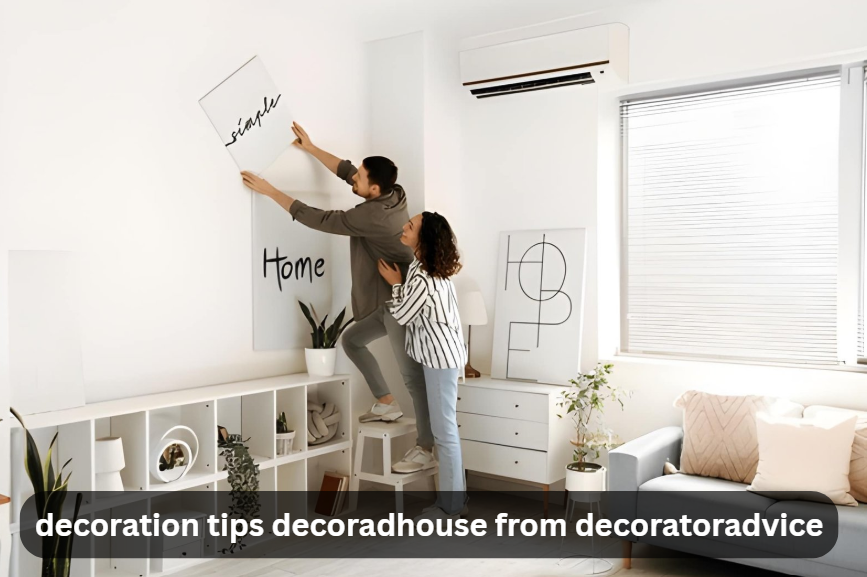
7 Expert decoration tips decoradhouse from decoratoradvice to Elevate Your Home in 2026
You repainted. Bought the rug. Rearranged the sofa. Still doesn’t land.
Most decoration guides recycle the same advice — lighting layers, texture mixing, plants indoors. That advice isn’t wrong. It’s just everywhere. What’s missing is the stuff experienced decorators actually notice first: the ceiling, the room acoustics, the scent, art height calibration, and dead corners that quietly drag a space down.
The decoration tips decoradhouse framework targets those exact gaps. Each of these seven tips covers something almost no competitor content in the U.S. addresses. Homeowners searching for decoration tips decoradhouse consistently find this approach solves the problems standard guides leave open. If you’ve already done the basics, this is your real next move.
Tip 1: Stop Ignoring Your Ceiling — It’s Your 5th Wall
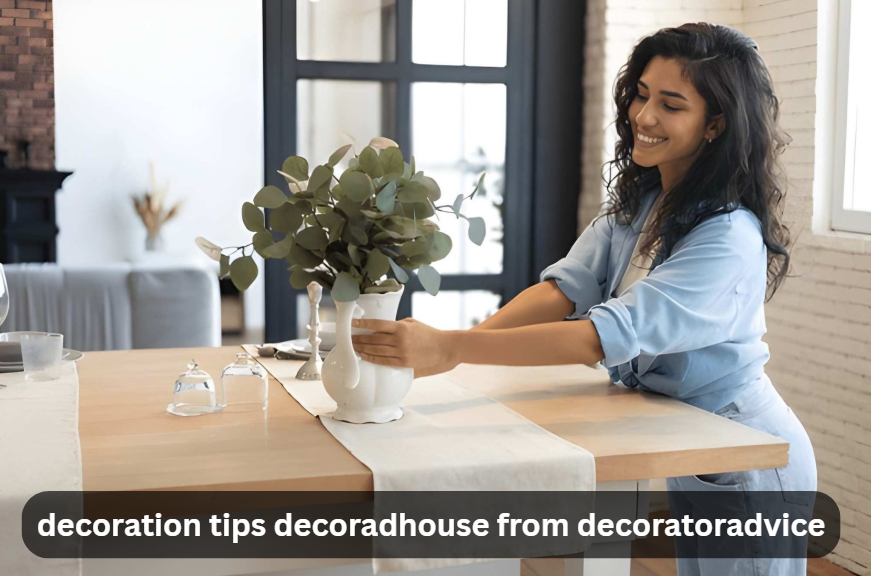
Paint it one shade darker than your walls — not a different color, just one step deeper on the same strip. The room instantly reads as more finished because the transition looks intentional, not default.
Add a ceiling medallion around your light fixture ($30–$40 at any hardware store) and the overhead fixture looks chosen rather than leftover. One trick almost nobody covers: paint a 4-inch stripe of your wall color onto the ceiling at the perimeter. It reads as crown molding. Costs nothing except paint you already have.
Tip 2: Your Home Has a Scent — Is It Intentional?
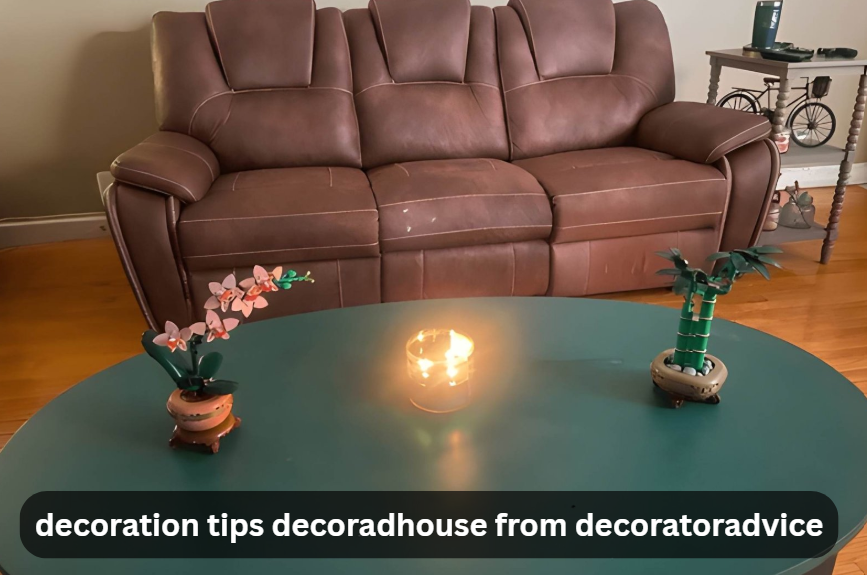
Every house smells like something. You habituate to yours within minutes. Guests notice it the second they walk in.
Scent zoning means one deliberate fragrance profile per room, one active scent source per floor — no competing smells fighting each other.
| Room | Scent Direction | Why It Works |
| Entryway | Citrus or bergamot | First impression; signals clean and fresh |
| Living room | Cedar or sandalwood | Warm, lingering, comfortable |
| Bedroom | Soft lavender or nothing | Heavy scent disrupts sleep quality |
| Bathroom | Eucalyptus or mint | Matches what guests already expect |
Practical fix: swap plug-in fresheners for a linen spray on sofa cushions. Interior stylists do this before photoshoots — cedar or lavender water on upholstery, about $8, smells genuinely curated instead of synthetic.
Tip 3: The 57-Inch Art Rule Is Wrong for Most of Your Rooms
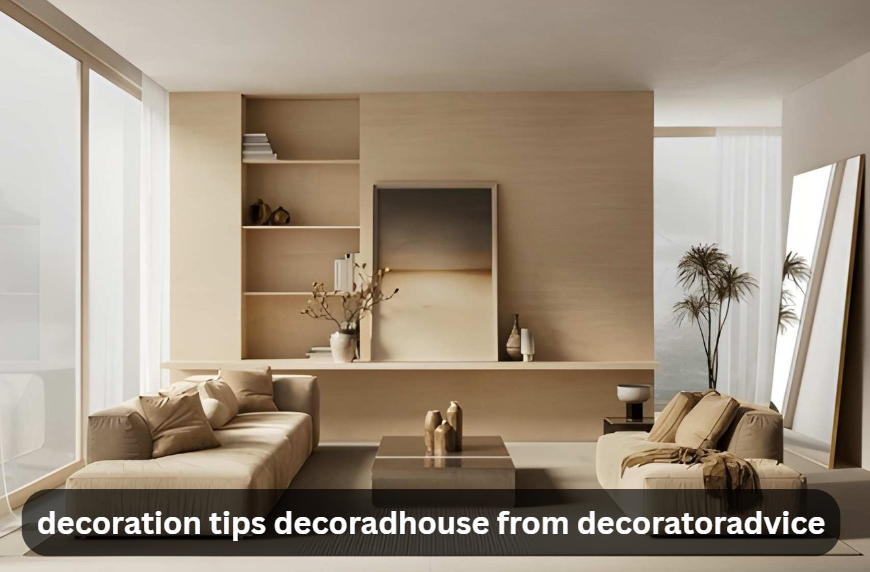
That museum standard works where people stand and view art at standing eye level. It’s wrong everywhere else.
| Location | Correct Center Height |
| Above a sofa | 6–8 inches above the sofa back |
| Dining room | 60 inches — seated eye level is lower |
| Above headboard | 4–6 inches above the headboard |
| Kitchen | 54 inches — counters drop the sightline |
Most common mistake in U.S. homes: art at 57″ above a sofa ending at 36″ — a 13-inch floating gap. Pull it down until the art reads as part of the furniture group below it, not an afterthought above it.
Tip 4: “Cold” Rooms Are Usually an Acoustic Problem
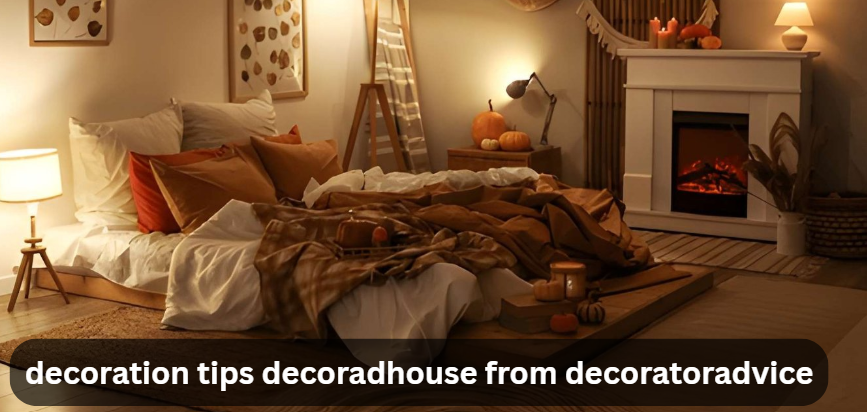
Hard floors, bare walls, minimal soft furnishings create echo and fatigue. Most people describing a room as “cold” are actually describing an acoustic problem, not a visual one. This is one of the decoration tips decoradhouse that standard guides never cross into — it sits between design and acoustics, a gap most decoration content ignores entirely.
Fixes that double as decorative objects:
- A large wool or high-pile rug — the single highest-impact acoustic change in any room
- Floor-to-ceiling curtains — the full panel height absorbs sound regardless of window size
- Open bookshelves filled with books
- An upholstered headboard in bedrooms
Add a large rug and floor-length curtains before buying anything else.
Tip 5: Your Rooms Don’t Talk to Each Other
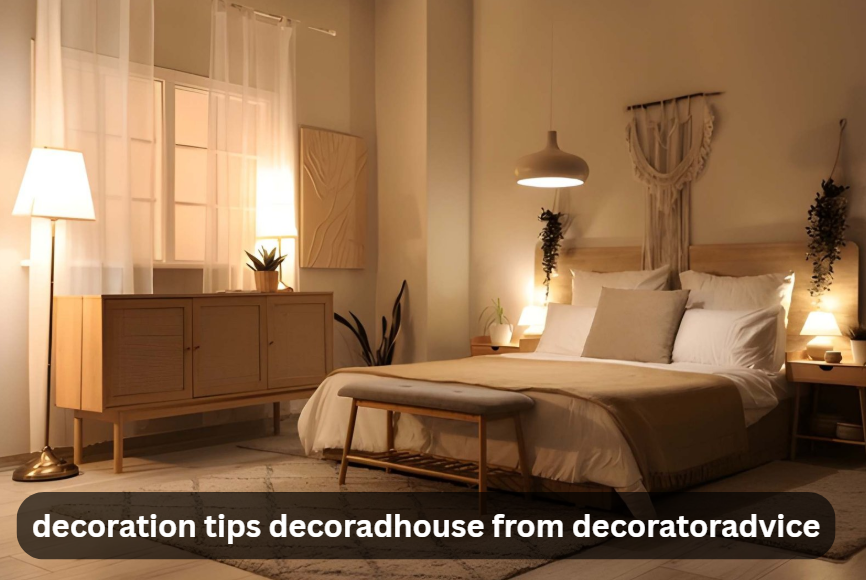
Every decoration article treats rooms in isolation. Nobody addresses transitions — the visual relationship between adjacent spaces — and that’s where most U.S. homes fall apart.
Stand at your front door. Look through to the kitchen. If the living room is warm-toned and the kitchen is cool-toned with nothing connecting them, the house reads as separate apartments stacked together, not a home.The 10-foot rule: From any doorway, at least one color or material from the room you’re standing in should be visible in the next room. A wood tone carried into a picture frame, a lamp base, a cutting board on the counter — that single thread is what cohesion actually means. Full room-connection guides are at decoratoradvice com.
Tip 6: Do the Cold Spot Audit Before Buying Anything New
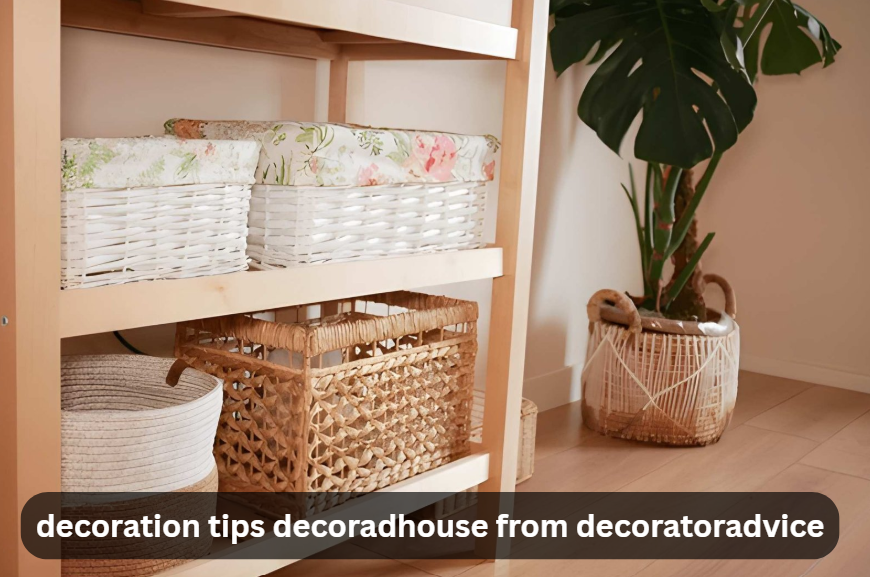
Every home has dead zones — corners and wall sections the eye skips over. They don’t feel uncomfortable exactly. They just contribute nothing.
Walk your home with your phone camera. Anything awkward in a photo is a cold spot worth fixing.
| Cold Spot Location | Best Fix | Estimated Cost |
| Dead corner | Floor lamp + one plant | $60–$150 |
| Blank hallway wall | Gallery ledge with rotating prints | $40–$80 |
| Space above cabinets | Grouped pottery or baskets | $30–$100 |
| Between two windows | Tall plant or floor mirror | $40–$120 |
According to the latest seasonal guides, autumn is the best time for this audit. Dead corners become obvious fast once you’re spending more time indoors.
Tip 7: Decoration Tips Decoradhouse on Functional Display
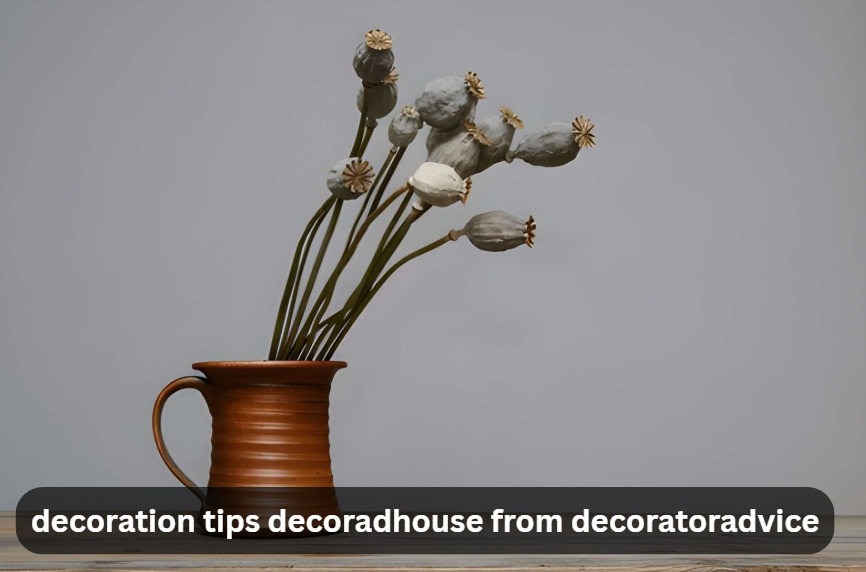
American homes split into two failure modes: hiding everything (clinical, cold) or leaving everything out (cluttered). The middle path is functional display — showing objects that have a use, but shown intentionally.
- Kitchen: A leaned cutting board, a jar of wooden spoons, one cookbook. Everything else in cabinets.
- Bathroom: One tray, 3 items max — candle, small plant, dispenser.
- Desk: 70% clear surface, one meaningful object, one small plant.
Clutter and curated display use the same objects. The only difference is selection.
Frequently Asked Questions
What decoration tips cover that most guides skip?
When homeowners apply decoration tips decoradhouse, the focus lands on ceiling treatment, room acoustics, scent zoning, correct art heights by room type, transition design between adjacent spaces, and the cold spot audit — the consistent gaps in mainstream U.S. decoration content.
How do I fix a room that looks decorated but still feels wrong?
Run the cold spot camera audit first. Then check acoustics — hard floors plus bare walls equals echo equals discomfort.
What is the 10-foot transition rule in home decoration?
From any doorway, at least one material or color from your current room should be visible in the adjacent room. That thread is what makes a home feel intentional rather than assembled piece by piece.
Where can I find the full framework including outdoor spaces?
Visit our blog for the complete library covering indoor, outdoor, and seasonal decoration guides.

Post Comment