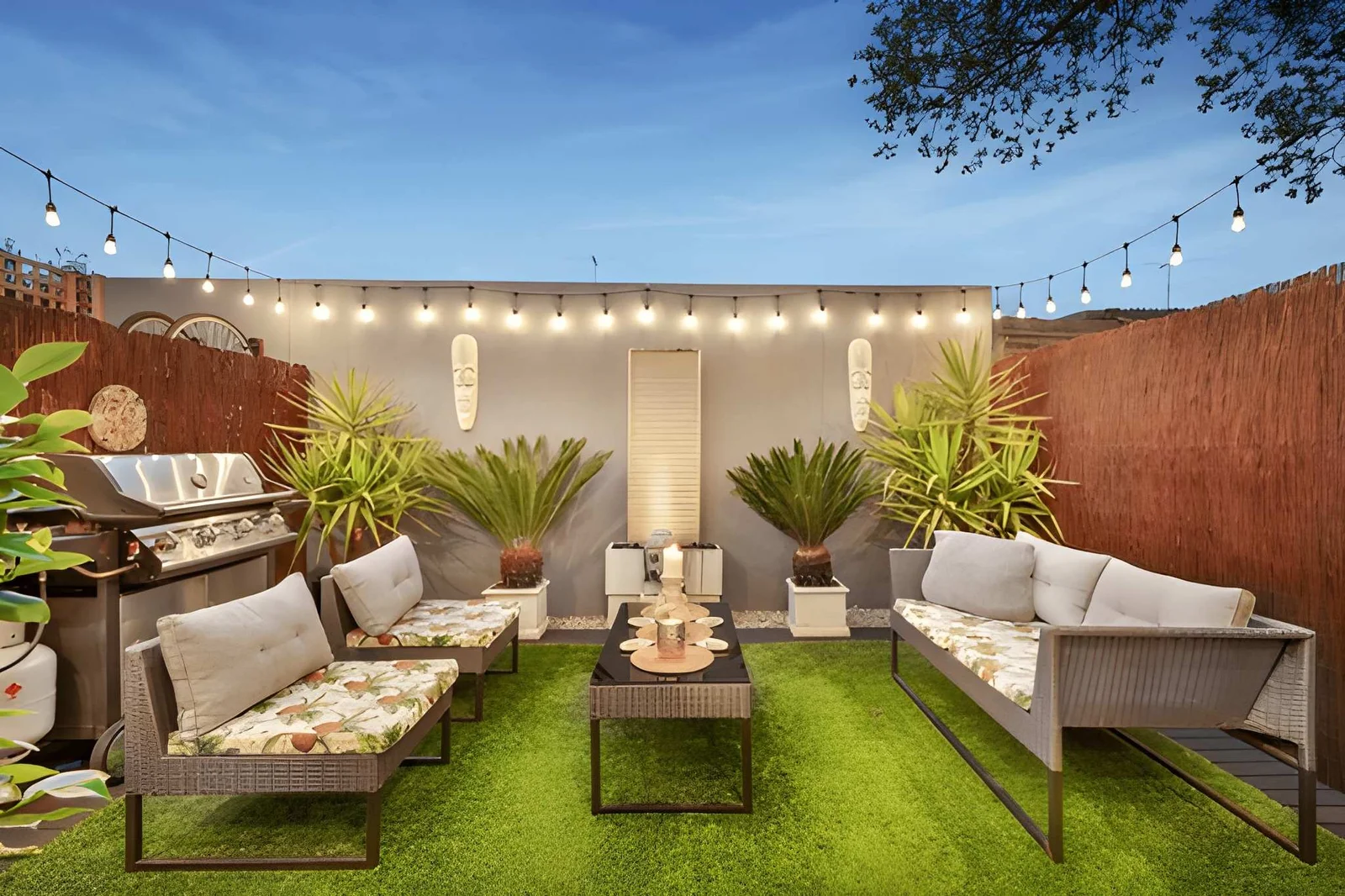
How Can Garden Decoration Transform Your Outdoor Space?
A garden without decoration is a planted space. A garden with the right decoration is an outdoor room — somewhere you actually want to spend time rather than somewhere you admire briefly from the window before going back inside. The difference between those two experiences isn’t the plants, the size, or the budget. It’s the intentional addition of elements that make the space feel finished, purposeful, and human.
Garden decoration is one of the most misapplied concepts in outdoor improvement — primarily because it’s often treated as the first step when it’s actually the last. Decorating a structurally unresolved garden produces a collection of objects in an unorganized space. Decorating a garden with clean edges, defined zones, and established planting produces transformation — each decorative element amplifies the structure beneath it rather than floating randomly above unresolved ground.
This article covers how garden decoration actually works: which elements produce the highest visual transformation, how to sequence decoration decisions for maximum impact, which common garden decoration mistakes make spaces look worse rather than better, and how US homeowners can use decoration to give their outdoor spaces a genuine design identity without an expensive landscape overhaul.
What Garden Decoration Actually Does to an Outdoor Space
Garden decoration serves functional design purposes beyond aesthetics. Understanding what each decorative element contributes — not just how it looks but what role it plays — is what separates decoration that transforms from decoration that accumulates.
| Garden Decoration Element | Design Function | Secondary Benefit |
|---|---|---|
| Containers and pots | Creates movable planting zones, defines areas | Can be rearranged seasonally |
| Garden art or sculpture | Establishes focal point, creates visual destination | Gives the eye a landing point |
| Outdoor lighting | Extends usability into evening, creates atmosphere | Improves security |
| Water features | Introduces sound and movement, creates focal point | Masks ambient neighborhood noise |
| Trellises and screens | Adds vertical structure, creates privacy | Supports climbing plants |
| Garden furniture | Creates functional zones, communicates purpose | Makes space actively livable |
| Decorative edging | Defines boundaries, elevates appearance of beds | Reduces maintenance by containing plants |
| Pathway materials | Organizes movement, connects zones | Prevents lawn wear patterns |
Each element is doing design work — not simply adding visual interest. This is the framework that distinguishes effective garden decoration from random outdoor purchasing.
How Garden Decoration Transforms Specific Outdoor Spaces
The Flat, Featureless Lawn
This is the most common starting point for US garden decoration projects: a green rectangle with no particular character, no focal point, and no reason to enter it beyond mowing.
Effective garden decoration for this situation works from the outside in. First, defining the perimeter — decorative edging along the lawn borders and any bed edges, followed by mulching to create clear distinction between lawn and planted areas. Second, establishing a focal point somewhere in or adjacent to the space: a specimen container plant, a garden sculpture, a birdbath, or a piece of outdoor art. Third, creating a destination — a defined seating area with furniture and an outdoor rug that gives the flat space a reason to enter it.
The flat lawn that receives these three layers of garden decoration stops reading as an undifferentiated green space and starts reading as an organized outdoor environment with zones, focal interest, and functional purpose.
The Small Urban Garden
Small gardens — the back gardens of US row homes, the urban courtyard spaces of townhouses, the side yards of compact lots — respond to garden decoration differently than larger spaces. Scale is the primary constraint, and over-decoration is the most common failure.
The garden decoration principle for small spaces: one significant element per zone rather than multiple small objects. A single large container with a bold planting, positioned at the garden’s visual center, does more than four small pots scattered around the perimeter. One substantial piece of garden art at eye level does more than a collection of small decorative stakes. One outdoor lighting source — string lights at overhead height — does more than multiple competing fixture types.
| Small Garden Decoration | Effect | Common Mistake |
|---|---|---|
| One large statement container | Creates focal point, adds height | Multiple small pots competing for attention |
| Single overhead string light | Defines the space, creates atmosphere | Multiple different light types |
| One seat and one side table | Creates destination | Full dining set too large for the space |
| Vertical trellis with climbing plant | Adds height without consuming floor space | Low-growing plants only |
| Mirror on fence or wall | Doubles perceived depth | No reflective surface to expand space |
| One-material hardscape | Coherent, clean appearance | Multiple paving materials competing |
The Neglected Back Garden
A back garden that’s been allowed to accumulate without design intention — random plants, various objects, no clear structure — needs garden decoration applied in a specific sequence to avoid adding to the visual noise rather than reducing it.
The sequence: remove before decorating. Any object that arrived without a specific design intention, any plant in the wrong position or wrong condition, any structure past its functional life should leave before decoration begins. What remains after editing is the foundation decoration will amplify.
Then: establish one clear zone as the focus of transformation. Complete that zone — edges, planting, furniture, lighting — before attempting to improve other areas. A fully resolved corner produces more visible transformation than a whole garden partially improved.
Garden Decoration Elements That Produce the Highest Impact
Containers: The Most Versatile Garden Decoration Tool
Containers are the garden decoration element with the widest range of applications and the most immediate visual impact because they’re movable, replaceable, and can create planting interest in any location regardless of underlying soil conditions.
The key variable is scale: containers sized appropriately for the space they’re in read as design decisions. Containers too small for the space they’re in read as an afterthought. As a general guide, the garden decoration container should feel slightly too large when you’re purchasing it — in the actual outdoor context, it will read correctly.
| Container Size | Best For | Common Mistake |
|---|---|---|
| Small (under 10″) | Tabletop groupings, window sills | Used on ground as sole container — disappears |
| Medium (10–18″) | Porch steps, wall groupings | Used alone on large patio — too small |
| Large (18–30″) | Main garden focal points, patio anchors | Correct for most primary positions |
| Very large (30″+) | Garden statement pieces, specimen trees | Under-used — most impactful single container |
Outdoor Lighting: The Garden Decoration Element That Extends the Day
Garden decoration that doesn’t address lighting leaves half the outdoor experience unaddressed. Evening use of an outdoor space is determined almost entirely by whether the lighting makes it inviting to be in after dark — and most US gardens have either no artificial lighting or lighting that’s purely functional (security lighting, path lights with no atmosphere).
String lights at overhead height — the single most accessible garden decoration lighting choice — produce an immediate evening transformation for $25 to $60. They create a ceiling plane, establish a boundary for the space, and produce warm light that makes the garden feel like an outdoor room rather than an outdoor area. Positioned above a seating zone, they’re the garden decoration element with the highest daily impact because they extend the space’s usable hours rather than simply making it more attractive during existing daylight.
Garden Art and Sculpture: The Focal Point Creator
A garden without a focal element is a space without a visual center of gravity. Garden art — which can mean anything from a formal sculpture to a found object to an architectural fragment — gives the eye a place to go when looking into the garden, which creates the sense of visual purpose that makes designed gardens read differently from planted ones.
The placement principle: position the focal element at the natural terminus of the main sightline into the garden from the primary viewing position (typically the interior window or back door). This makes the art visible from inside the home — where the garden is experienced most hours of the day — not just from within the garden itself.
Garden Decoration Mistakes That Reduce Rather Than Increase Impact
| Mistake | What It Produces | Better Approach |
|---|---|---|
| Too many small objects distributed throughout | Visual noise — eye has nowhere to rest | Fewer, larger objects in strategic positions |
| Decoration before structure | Objects floating in unresolved space | Edge, mulch, and define before decorating |
| Mismatched decoration styles | Incoherent aesthetic — no design identity | One style direction throughout |
| Seasonal decoration without evergreen anchors | Garden looks bare out of season | Permanent structural decoration + seasonal accents |
| Lighting of too many different types | Competing visual elements after dark | One consistent lighting type throughout |
| Large furniture in small space | Space feels cramped, furniture looks wrong | Scale down or choose foldable, minimal profile pieces |
Frequently Asked Questions
What is garden decoration and how does it differ from planting?
Garden decoration refers to the non-plant elements added to an outdoor space to give it visual structure, personality, and functional character — containers, art, lighting, furniture, water features, trellises, and edging. Planting produces organic growth and seasonal change; garden decoration provides the permanent framework within which planting performs. Both are needed, but garden decoration creates the designed quality that planting alone rarely achieves.
What’s the most impactful single piece of garden decoration for most US gardens?
String lights at overhead height for gardens primarily used in the evening, or a large container plant in the right position for gardens primarily experienced visually. The first produces the largest behavioral change (people actually use the space after dark); the second produces the largest aesthetic change (creates focal point the garden was missing). Which matters more depends on whether the garden’s primary failure is functional or visual.
How do I create a garden decoration style without professional help?
Choose one material and repeat it: all terracotta containers, all aged zinc, all concrete — a consistent material throughout the garden creates the visual coherence that looks designed. Then choose one lighting type and apply it consistently. And limit the color palette of both plants and decoration to two to three tones. Repetition, consistency, and restraint produce designed-looking garden decoration more reliably than variety and abundance.
Does garden decoration need to be expensive to be effective?
No. String lights cost $25 to $60. A large terracotta container costs $20 to $80. Clean edging costs $0 if you already own the tool. Fresh mulch costs $8 to $15 per bag. These are among the most effective garden decoration interventions available — and none of them approach the cost of the furniture, sculpture, and water features that most people associate with decorated gardens.
How often should garden decoration be updated?
Permanent structural elements — furniture, sculpture, lighting fixtures, significant containers — don’t need regular replacement. Seasonal accents — the planting in containers, cushion covers, small decorative objects — can be refreshed seasonally for low cost and significant visual renewal. The best garden decoration strategy is to invest once in permanent structural elements and refresh seasonally through planting and low-cost soft elements.
The Bottom Line
Garden decoration transforms an outdoor space not by adding more things to it but by adding the right things in the right positions for the right reasons. Focal elements that give the eye a destination. Lighting that extends usability into the evening. Containers that create planting interest in any location. Furniture that turns open space into a destination. Edging that gives every other element a clean framework to exist in.
The sequence matters as much as the elements: structure and editing before decoration, permanent anchors before seasonal accents, one zone completed before the next is begun. Applied in that order, garden decoration doesn’t just improve a space — it transforms it from somewhere you look at into somewhere you actually want to be.
Must visit https://tipsbydecoratoradvice.com/ for garden decoration.

Post Comment