Wood Flooring and Installation Atlanta GA: Hardwood Flooring Explained
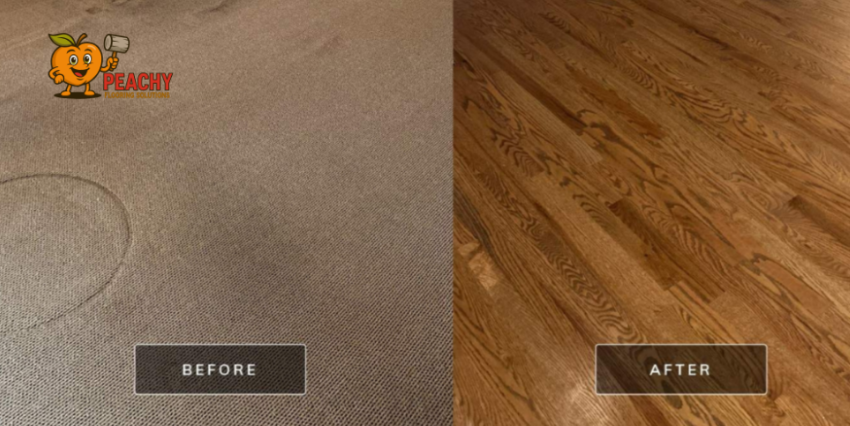
A hardwood floor can completely change the character of a smart home.
Beyond its appearance, quality wood flooring can create visual continuity between rooms, complement both traditional and contemporary interiors, and provide a surface capable of serving a household for decades.
For homeowners researching wood flooring and installation Atlanta GA, however, choosing an attractive species or stain is only part of the decision.
Atlanta’s climate, the home’s subfloor, moisture conditions, plank construction, and installation method can all influence how well a new floor performs.
Why Atlanta’s Climate Matters for Wood Floors
Wood is a hygroscopic material, meaning it naturally gains and loses moisture as environmental conditions change.
Those changes can cause wood flooring to expand or contract.
This matters in Georgia because humidity and indoor conditions can fluctuate throughout the year.
That is why professional moisture testing should not be viewed as an unnecessary extra.
Before installation, a flooring professional may evaluate both the flooring material and the subfloor.
Solid Hardwood or Engineered Hardwood?
One of the biggest decisions involves choosing between solid hardwood flooring and engineered hardwood flooring.
Solid hardwood is manufactured from a single piece of wood.
Its substantial wear layer can make it possible to sand and refinish the floor multiple times, depending on the product and its condition.
Engineered hardwood also has a genuine wood surface, but that wear layer is bonded to a multilayer core.
Its construction generally provides greater dimensional stability when environmental conditions fluctuate.
Neither option is automatically best for every Atlanta property.
Solid wood may be an excellent choice for appropriate above-grade applications with suitable subfloors and controlled interior conditions.
Engineered products are often considered where additional dimensional stability is beneficial or where installation conditions differ from those suited to traditional solid hardwood.
The correct decision should consider:
- The subfloor material
- Indoor moisture conditions
- Plank width and construction
- Manufacturer specifications
- Desired refinishing potential
- Budget and design preferences
Current Atlanta flooring professionals likewise emphasize evaluating moisture and the specific installation environment when comparing engineered and solid wood.
What Happens Before Hardwood Installation?
The quality of a finished floor often depends on work homeowners never see once the last plank is installed.
Proper subfloor preparation is one example.
An installer should examine whether the substrate is clean, structurally sound, sufficiently flat, and appropriate for the chosen flooring system.
Problems at this stage can contribute to squeaks, movement, uneven areas, loose planks, or premature wear.
Flooring must also be stored and conditioned appropriately.
In other words, installation starts well before anyone reaches for a flooring nailer or adhesive.
Choosing the Right Installation Method
Professional hardwood floor installation is not based on one universal method.
Depending on the product and substrate, a wood floor may be nailed, stapled, glued, floated, or installed through another manufacturer-approved system.
A nail-down system is commonly associated with appropriate wood subfloors.
Some engineered products can be glued over suitable substrates, including properly prepared concrete.
Floating installations may also be permitted for certain engineered flooring systems.
A trustworthy installer should be able to explain why a particular method has been recommended rather than simply applying the same technique to every project.
Prefinished vs. Site-Finished Flooring
Homeowners also have to decide how they want the final surface finished.
Prefinished boards arrive with a factory-applied finish.
Installation can be relatively streamlined because sanding and applying finish throughout the home are not normally required after the boards are laid.
Site-finished hardwood is installed unfinished and then sanded, stained when desired, and coated in place.
This approach can provide substantial control over stain color and appearance.
Existing hardwood introduces another possibility: hardwood floor refinishing.
Floors with an adequate remaining wear layer and without extensive structural or moisture damage may not always require complete replacement.
A professional assessment can determine whether sanding and refinishing could restore the existing surface.
That evaluation can prevent homeowners from replacing flooring that still has useful life remaining.
What Should Homeowners Look for in an Atlanta Flooring Contractor?
Choosing an Atlanta flooring contractor should involve more than comparing photos and prices.
A competent flooring professional should be willing to discuss the technical side of the project.
Homeowners can ask whether the contractor:
- Checks site and subfloor conditions before installation
- Uses appropriate moisture-testing procedures
- Follows manufacturer installation requirements
- Explains why a particular flooring construction is recommended
- Identifies necessary subfloor work before installation begins
Caring for a Newly Installed Wood Floor
Long-term performance continues after installation.
Routine dry cleaning can help prevent grit from scratching the finish.
Spills should generally be addressed promptly, and cleaning products should be compatible with the flooring manufacturer’s recommendations.
Homeowners should also pay attention to indoor environmental conditions.
Significant moisture changes can affect natural wood even when installation was performed correctly.
Furniture pads, entrance mats, regular cleaning, and prompt attention to leaks can all help protect the surface.
When wear eventually becomes noticeable, homeowners with suitable flooring may also have the option of professional refinishing rather than complete replacement.
A Better Floor Starts With Better Preparation
The appearance of hardwood receives most of the attention, but long-term results often depend on less visible decisions: product selection, moisture evaluation, acclimation or conditioning, subfloor preparation, and installation technique.
For Atlanta-area property owners considering hardwood installation, refinishing, or replacement, Peachy Flooring Solutions is one local resource homeowners can consult for an evaluation of their flooring project.
Top 3 FAQs About Wood Flooring in Atlanta
1. How much does hardwood flooring installation cost in Atlanta?
There is no single accurate price for every home.
Material selection, room size, flooring removal, subfloor preparation, wood species, installation method, finishing, stairs, and moisture-related work can all affect the estimate.
2. Is engineered or solid hardwood better for Atlanta homes?
Both can perform well when used in appropriate conditions.
The right option depends on the subfloor, grade level, environmental conditions, plank specifications, and manufacturer’s requirements rather than climate alone.
3. How long does hardwood flooring installation take?
The schedule depends on the project’s size and complexity, the condition of the subfloor, the flooring product, preparation requirements, installation method, and whether the floor is prefinished or finished on site. If you need more information visit https://tipsbydecoratoradvice.com/

Post Comment