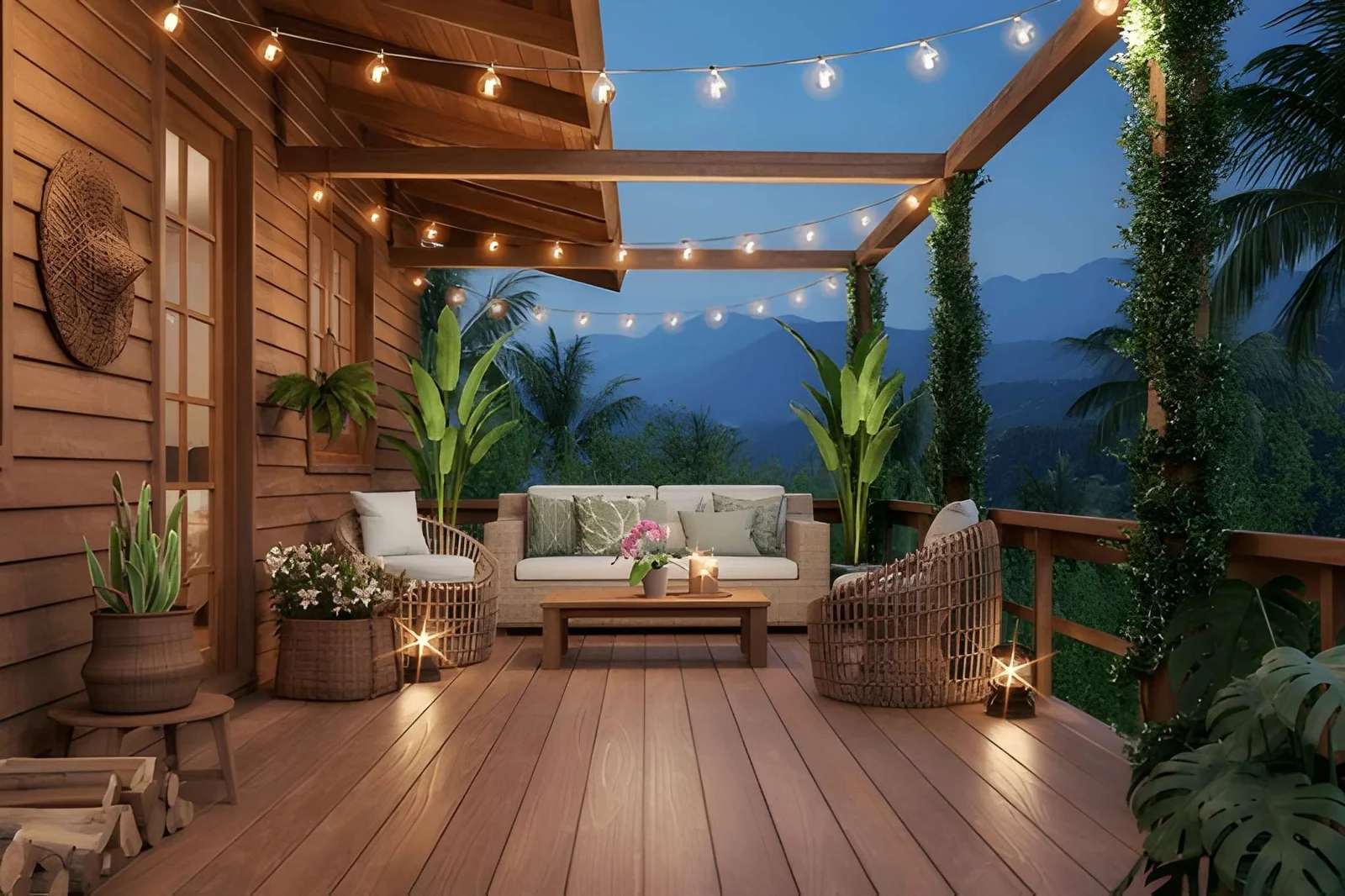
How to Decorate a Balcony for Relaxation?
Most balconies in US apartments and homes are significantly underused relative to their potential. They’re too small, people think. Too exposed. Too windy. Nothing really fits on them. And so they accumulate a folding chair that hasn’t been unfolded since last spring, a dead plant in a pot that looked better in the store, and the vague intention of doing something with the space eventually.
The balcony that gets used — that becomes a genuine outdoor retreat rather than a space you look at from inside — is almost never the largest or the most architecturally interesting one. It’s the one that’s been deliberately decorated for the specific purpose of relaxation: comfortable enough to stay in for more than twenty minutes, private enough to feel like a separate space, sensory enough to produce a different psychological experience from the interior rooms it adjoins.
This article covers exactly how to achieve that. Not with expensive furniture or structural changes — with specific, accessible decoration decisions that address the real reasons balconies don’t get used: discomfort, lack of privacy, inadequate light quality after dark, no sensory layering, and the absence of any element that makes the space feel like it was designed for being in rather than for looking at.
Why Most Balconies Don’t Feel Relaxing
Understanding the specific failure modes of typical US balconies reveals which decoration decisions produce the most significant improvement.
| Common Balcony Problem | Why It Prevents Relaxation | Decoration Solution |
|---|---|---|
| Hard, uncomfortable seating | Physical discomfort limits time spent | Cushioned seating or hammock chair |
| No privacy from neighbors | Feeling observed prevents relaxation | Screen plants, privacy panel, or curtains |
| Harsh afternoon sun | Too hot to use during peak hours | Shade structure or sail shade |
| No evening lighting | Space unusable after dark | String lights or solar lanterns |
| Bare, hard floor surface | Visually and physically cold | Outdoor rug |
| No acoustic insulation | City noise prevents decompression | Plants and soft surfaces absorb sound |
| Nothing alive in the space | Lacks the organic quality that promotes calm | Plants — particularly fragrant ones |
| No sensory engagement beyond visual | One-dimensional experience | Scent, texture, sound element added |
Balcony Decoration for Relaxation: The Elements That Matter Most
Comfortable Seating: The Non-Negotiable First Element
A balcony decorated for relaxation that doesn’t have genuinely comfortable seating hasn’t solved its primary problem. This seems obvious, but most balcony seating decisions in US homes prioritize size (what fits?) and weather resistance (what won’t get ruined?) over the comfort that determines whether the space actually gets used.
For small balconies — the majority of US apartment balconies — the most effective seating solutions are those that maximize comfort within a minimal footprint:
Hanging egg chairs or hammock chairs are among the best small-balcony seating investments available. They take up approximately 2 feet of floor space, provide a genuinely enclosed, comfortable sitting experience that produces immediate psychological decompression, and require only a ceiling attachment point (a screw-in hook rated for the chair’s weight). Cost: $80 to $400 depending on quality.
Low-profile floor seating — oversized floor cushions or a zafu and zabuton combination — takes up minimal space, stores flat when the balcony isn’t in use, and creates a different postural relationship with the space that many people find more relaxing than upright chair seating.
A compact two-person loveseat with deep cushions works on balconies with at least 4 feet of usable depth. The depth of the seat cushion (18 inches or more) is the variable most correlated with whether seating invites staying — shallow seat depths produce perching rather than relaxing.
| Seating Type | Space Required | Comfort Level | Best Balcony Size |
|---|---|---|---|
| Hanging egg/hammock chair | 2–3 sq ft floor, ceiling attachment | Very High | Any size with ceiling |
| Floor cushions/poufs | 2–4 sq ft when in use | Medium-High | Any size |
| Bistro chairs + table | 6–8 sq ft | Medium | Medium+ balcony |
| Loveseat with cushions | 8–12 sq ft | High | Medium+ balcony |
| Daybed or chaise | 15–20 sq ft | Very High | Large balcony |
| Sofa + coffee table | 25+ sq ft | Very High | Large balcony only |
Privacy: The Psychological Prerequisite for Relaxation
The most underaddressed reason US balconies don’t feel relaxing is the absence of privacy. A balcony where you feel observed — by neighbors at the same level, by people in adjacent buildings, or by street-level passersby — cannot produce genuine relaxation regardless of how comfortable the seating is. The nervous system requires a sense of being sheltered to downregulate from active alertness to restorative rest.
Privacy on a balcony doesn’t require permanent structural changes. It requires vertical elements that create visual separation:
Bamboo roll privacy screens attach to balcony railings and create immediate visual privacy on three sides. They cost $30 to $80 per panel, install with zip ties or hooks, and are appropriate for renters since they’re completely removable. Bamboo also has a naturally calming aesthetic that contributes to the relaxation atmosphere.
Tall container plants — bamboo, columnar arborvitae, tall ornamental grasses — create organic privacy screening that softens the balcony’s relationship to its surroundings. Plants also add sound absorption, scent, and the biological quality that makes outdoor spaces feel more removed from urban context.
Outdoor curtains on a tension rod system provide privacy that can be opened for view and closed for seclusion. They also soften the balcony acoustically and add the textile quality that makes the space feel more room-like.
Lighting: The Element That Makes a Balcony Usable After Dark
A balcony without evening lighting is a space that gets used for perhaps three to five hours per day at best — during daylight hours when the weather is right. Add warm evening lighting and the usable window expands to whenever you want to be outside, which for relaxation purposes is often specifically the evening.
The lighting approach for balconies follows the same principle as interior spaces: warm temperature (2700K), multiple sources at different heights, no harsh overhead single source.
String lights along the balcony perimeter — attached to railings, overhead if possible, along the wall — are the single most impactful balcony lighting addition. They cost $20 to $60, require only a nearby outlet or a solar-charged alternative, and produce the atmospheric warm light that makes balcony evenings feel genuinely special.
Solar lanterns require no electrical connection and can be placed anywhere on the balcony — on tables, hung from railings, grouped on the floor. They produce softer light than string lights and add a decorative element during daylight hours.
Battery-operated candles for tables add the warmth of candlelight without open-flame concerns on a balcony, which is relevant for renters and for buildings with fire codes restricting open flames.
The Sensory Layers That Transform a Balcony Into a Retreat
Plants: More Than Decoration
Plants on a balcony serve multiple relaxation functions simultaneously: they create privacy, absorb sound, produce fragrance, add the biological life that research consistently links to stress reduction, and create a visual environment that the brain processes as nature-adjacent rather than urban.
For relaxation specifically, fragrant plants produce the most direct physiological effect: lavender (documented anxiety-reduction properties in published research), jasmine (associated with improved sleep quality in several studies), and herbs like rosemary and mint that engage the olfactory system in grounding, calming ways.
| Plant | Relaxation Benefit | Sun Requirement | Container Suitable? |
|---|---|---|---|
| Lavender | Documented anxiety reduction, fragrant | Full sun | Yes |
| Jasmine | Sleep quality improvement, intensely fragrant | Partial to full sun | Yes |
| Rosemary | Grounding scent, edible | Full sun | Yes |
| Bamboo | Privacy + sound absorption + movement | Partial to full sun | Yes (large container) |
| Ferns | Humidity regulation, lush appearance, low light | Shade | Yes |
| Sweet grass / lemon grass | Citrus fragrance + mosquito deterrent | Full sun | Yes |
| Mint | Strong refreshing scent, edible | Partial sun | Yes |
The Outdoor Rug: The Quickest Transformation
A correctly sized outdoor rug is the single change that most immediately makes a balcony feel like a room rather than an outdoor ledge. It covers hard concrete or decking surfaces, adds thermal comfort underfoot (cold floors discourage barefoot relaxation), and creates the defined zone that makes the balcony read as a purposeful space.
The size should cover most of the balcony’s usable floor area — leaving only a few inches of perimeter. An undersized rug that reveals too much floor around its edges fails to create the room-like quality that makes a balcony feel like a retreat.
Balcony Decoration for Relaxation: By Budget
| Budget | Priority Elements | What to Skip |
|---|---|---|
| Under $100 | Outdoor rug + string lights + 2 floor cushions | Everything else — these three transform |
| $100–$250 | Above + hanging chair or loveseat cushions | Professional plants — supermarket herbs work |
| $250–$500 | Above + privacy screen + fragrant plants | Expensive furniture — comfort matters more |
| $500–$1,000 | Above + quality seating + proper plant collection | Nothing — full retreat achievable |
| Over $1,000 | Pergola or shade sail + full seating + full decoration | N/A — invest in what will be used most |
Frequently Asked Questions
What’s the most important decoration element for a relaxing balcony?
Comfortable seating — specifically, seating with sufficient cushion depth and back support to allow someone to stay for thirty minutes or more without physical discomfort. All other decoration elements enhance an experience that comfortable seating makes possible. Without it, no amount of plants, lighting, or decoration produces sustained relaxation.
How do I make a very small balcony feel relaxing?
A hanging chair, an outdoor rug covering most of the floor, and string lights overhead. These three elements work regardless of balcony size because they create vertical interest (the hanging chair, the lights above), cover the hard surfaces (the rug), and make the space feel defined and purposeful within whatever square footage is available. A 4×6-foot balcony decorated this way feels more relaxing than a 10×10-foot one with nothing intentional in it.
What plants work best on a shaded balcony?
Ferns (Boston fern, maidenhair fern), peace lilies, pothos, hostas, and impatiens all perform well in low-light balcony conditions. For fragrance in shade, gardenias require minimal direct sun and produce intense, relaxation-promoting fragrance. The shaded balcony is at a disadvantage for fragrant herbs but can still carry significant greenery that contributes to the relaxation atmosphere.
Can a renter create a truly relaxing balcony without permanent changes?
Yes — almost entirely. String lights attach to railings with clips. Outdoor rugs sit on the floor. Hanging chairs use screw-in ceiling hooks (most leases allow this for a small hook). Privacy screens attach with zip ties. Plants sit in containers. None of these require landlord permission in most US leases, and all move with the tenant at the end of the lease.
Does a balcony need to face a particular direction to be relaxing?
Direction affects when the balcony is most usable (east-facing for morning, west-facing for evening) but doesn’t determine whether it can be made relaxing. North-facing balconies with minimal direct sun are actually ideal for afternoon relaxation in warmer US climates because they avoid the heat that makes south and west-facing balconies uncomfortable during peak summer hours. The shade and privacy solutions described here make any orientation viable.
The Bottom Line
A balcony decorated for genuine relaxation isn’t about filling every inch with furniture and plants. It’s about addressing the specific conditions that prevent relaxation — discomfort, lack of privacy, inadequate evening light, absence of organic life and sensory richness — through specific, accessible decoration decisions that any US homeowner or renter can implement within a reasonable budget.
Comfortable seating first. Privacy second. Warm evening lighting third. Plants that add fragrance and life fourth. An outdoor rug that makes the floor feel like a room rather than a ledge fifth.
Five categories, any budget, completely transformative. The balcony that’s been collecting dust since you moved in can be the space you use every evening by this time next week.
For balcony decorations must visit https://tipsbydecoratoradvice.com/

Post Comment